The Tower: If You Build It, The Unconscious Will Come…
In 1958, Jungian analyst and scholar, Marie-Louise Von Franz, built a quadrate tower on a piece of land bordering a large forest near Bollingen, Switzerland. There, she established a hermitage for herself: a place of solitude where she could sink deep into her writing; her love of nature; and her studies of the psychological significance of alchemy and fairytales (among countless other topics). She intentionally had the tower built with no electricity or integrated plumbing. She collected wood for heating and cooking from the land and forest, and played often in a bog pond, loving its abundant frogs and toads. It was in this tower where she wrote many books, analyzed her own dreams, and contributed immensely to the field of depth psychology. The benefits of her solitude in this tower ironically touched the hearts of so many of us — those in the field of psychology, spiritual seekers, and countless others for generations to come. Although Von Franz died halfway around the world in 1998 when I was only 13, and although I never got to meet her, I consider her an Elder and a profound spiritual teacher in my life. Somehow, years later, her tower, and the work completed therein, opened a door in the depths of my soul.
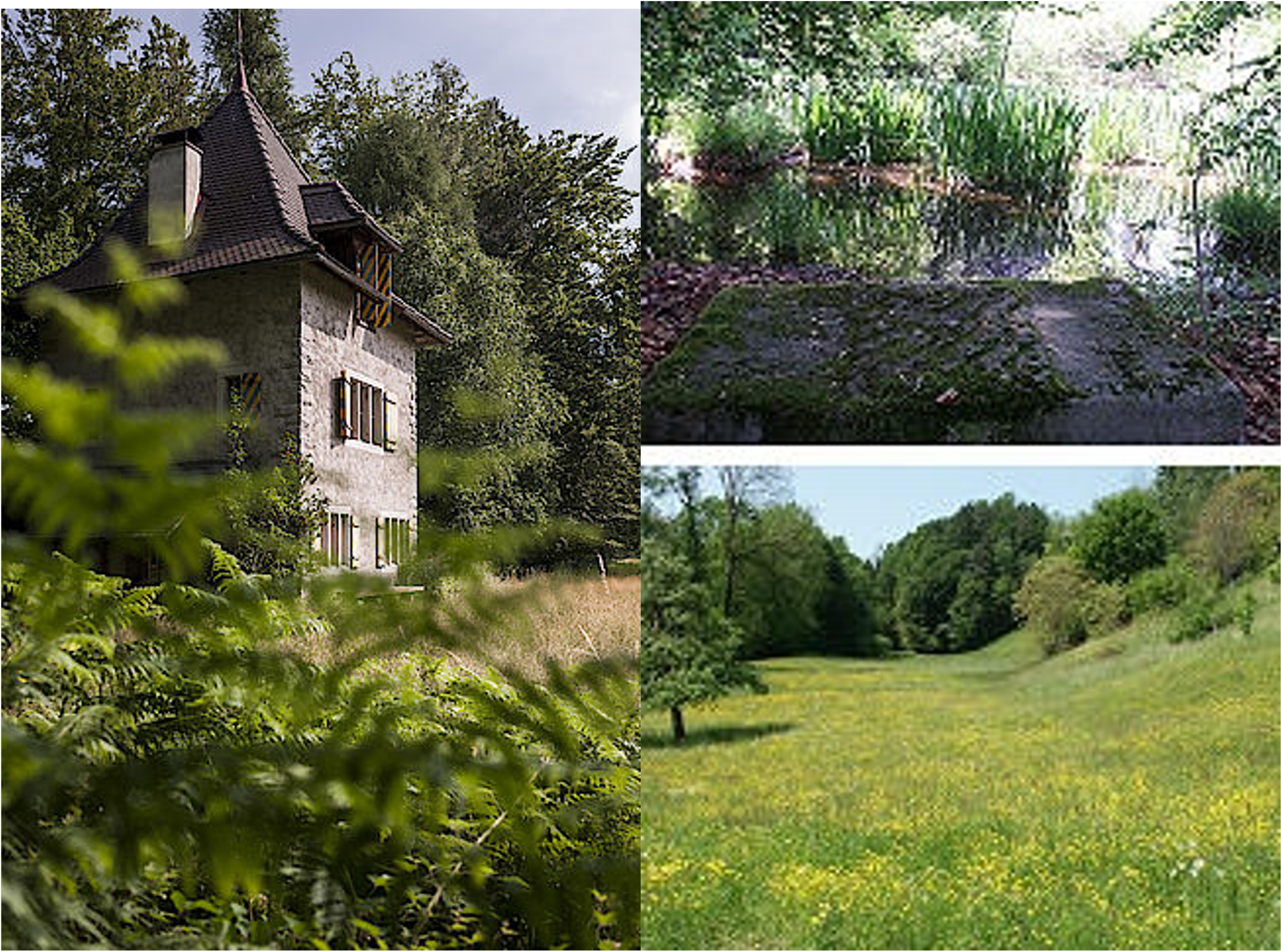
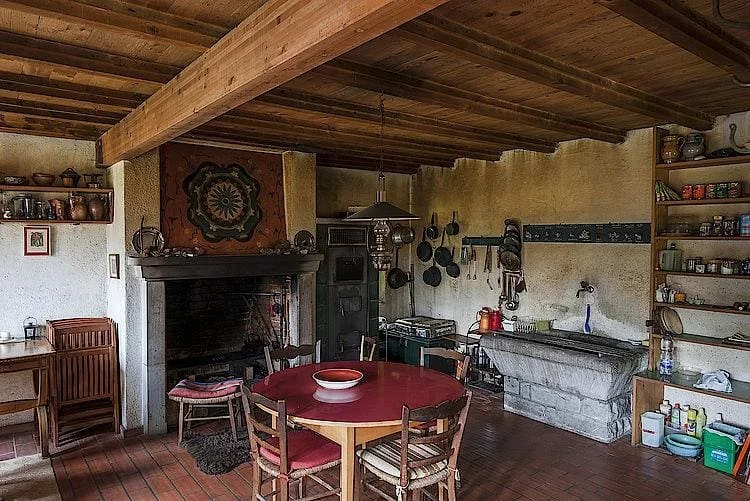
Above: Springtime images of Marie-Louise Von Franz’s tower in Bolligen and its surrounding land. Below: A sneak into one of the rooms in Von Franz’s tower, with its great hearth and central mandala painting.
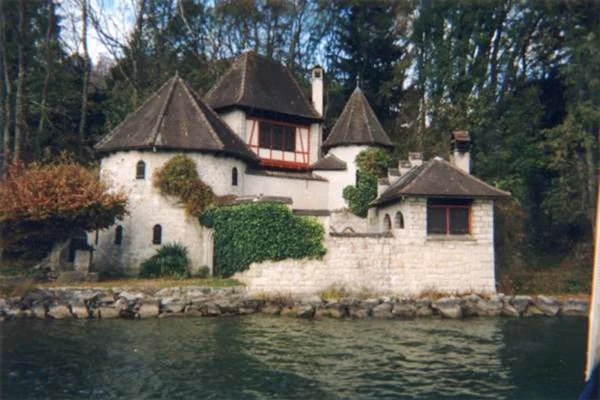
Von Franz built her tower at the behest and encouragement of her mentor and teacher, Carl Gustav Jung. A psychiatrist, psychoanalyst, spiritual sage, and progenitor of an entirely new realm of psychology that focused on the archetypal unconscious, Jung was the first of the two to build a tower. In 1923, thirty-five years before Von Franz built her hermitage, Jung built a two-story round tower on his land in Bolligen, directly on the shores of Lake Zürich. It was a circular structure made of stone and he was directly involved in its construction. Additions to this tower were made in 1927, 1931, and 1935, resulting in a four-tower structure with connected parts. And he wasn’t done yet. At the age of 80 in 1955, following the death of his wife, Emma, Jung built an addition on his 1927 tower to symbolize his mind’s expansion into old age. Indeed, for Jung, all these towers were an outward expression of his interior extensions of consciousness. He used his Bolligen tower(s!) as a place of retreat and contemplation, and some of his most impressive works were created there.
What is a Tower?
Jung and Von Franz both understood the preciousness of solitude, as well as its potency to connect us to the numinous and a creative, meaningful life. For them, the psychological world was just as real (in fact, even more real) than the physical one, so its helpful see their tower-building examples as symbolic rather than an encouragement to get into the medieval housing market. For them, a tower was an expression of an inner reality rather than an outer object unto itself.
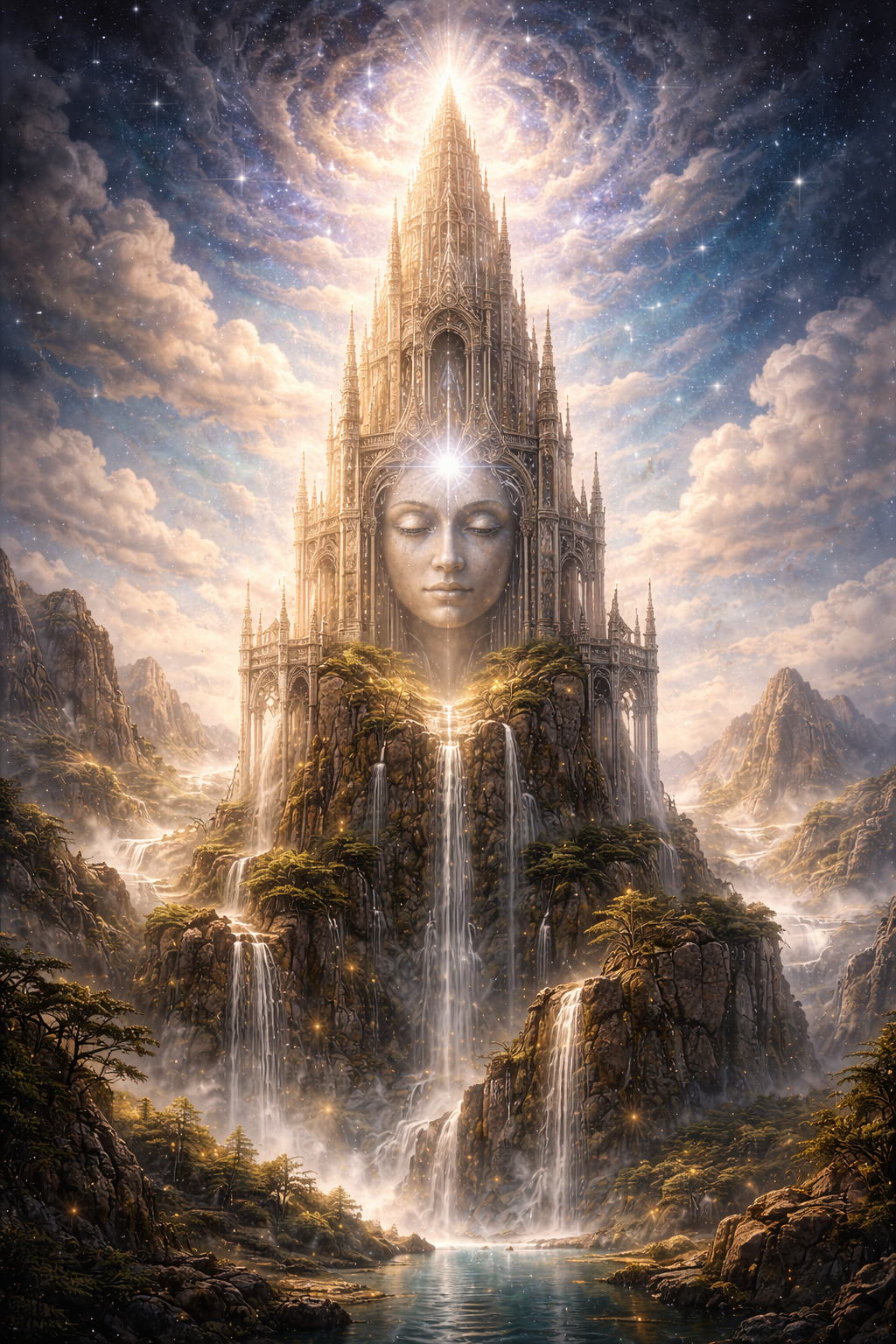
A tower is a place that connects earth and sky. It is a symbol for the Self that is rooted in lived experience and that simultaneously reaches for the stars and the mysteries beyond them. A tower is also a place of defense and protection: guarding against the tendencies of extroversion and distraction, and the confusion of conventional life. It stands alone, and indeed, in fairy tales, towers are often solitary structures within the wildness of the wood — surrounded by the brambles of danger and magic. A tower perches one “high up,” and therefore grants a certain vista of the psychological landscape. As a result, the tower is also that which enables clarity and vision into our present, our future, and our incalculable depths. Therefore, a tower is an inner place of protected solitude that links our earthly reality to the numinous, and that encourages the depths of the unconscious (the wakeful unknown) to speak to our conscious minds with clarity and vision.
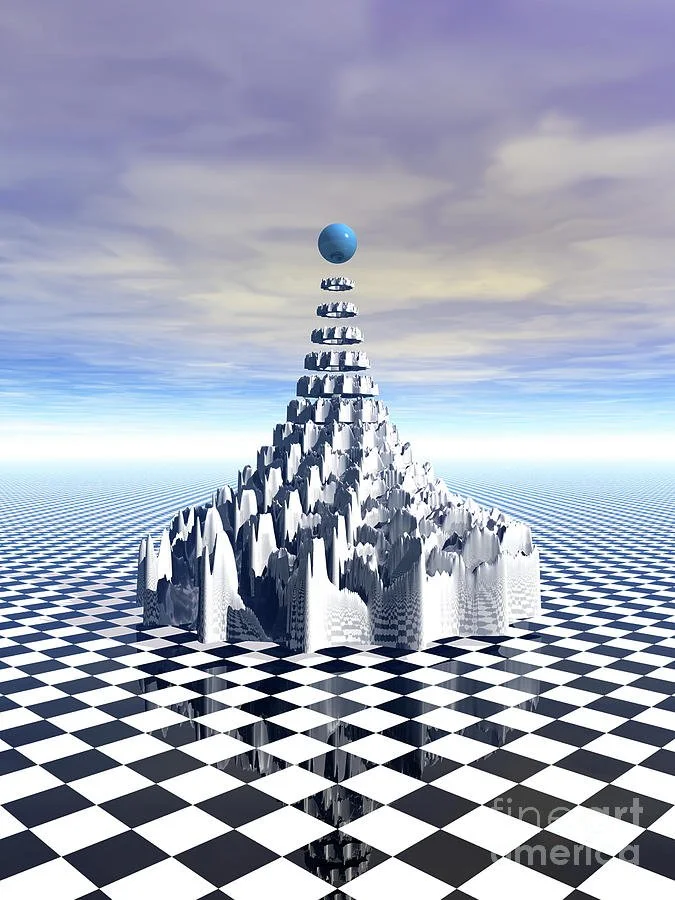
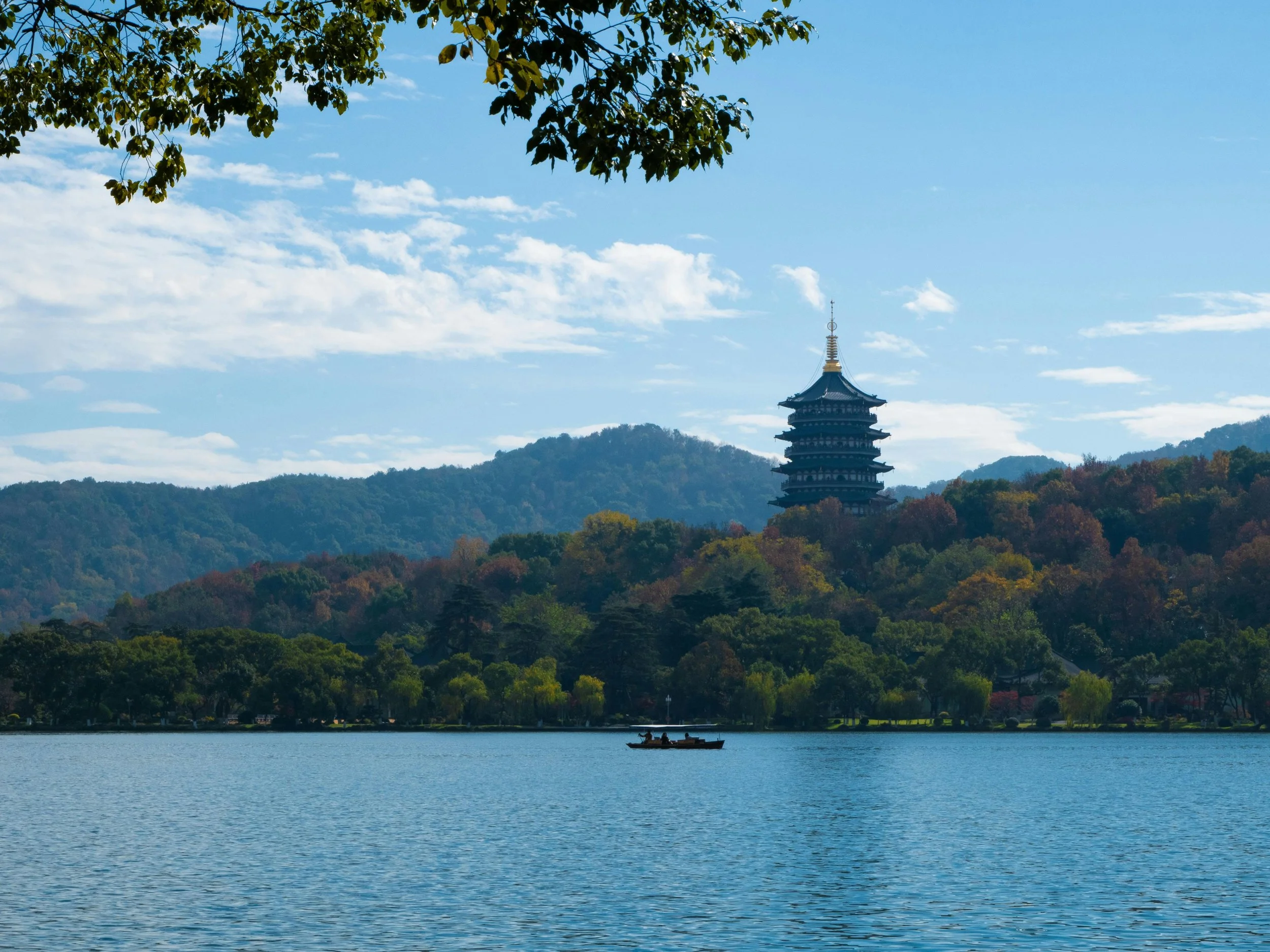
Surreal Fractal Tower created by artist Phil Perkins https://philperkins.photography/.
We all need to build and enter our own inner tower if we are truly interested in psychological development and an authentic, spiritual life. We need a tower — that which protects space; that which connects us to our depths; that which reaches for the-not-yet-manifest; that which enables clarity and vision; and that which allows for something we don’t understand to SPEAK. To call the tower a “practice” or “a discipline” is fine, but it would be more accurate to say that the tower is an interior mode of spiritual erectness where we encounter mystery by not blocking it. True, the tower protects solitude and space, by keeping out a certain amount of superfluous noise, but it doesn’t seek to choreograph what arises within it. To be in the tower is to acquiesce to the dance of a mysterious director. When above and below connect, there is an expression through you, and this is a spontaneous event.
For some, being in the tower might look like a time of formal spiritual retreat, a vision quest, or a weekend of centering prayer — but since the tower is really a solitary mode of being unblocked rather than a specific spiritual practice, we have to be careful to not limit the manifold ways in which different people might access and construct it. Still, examples are helpful. I have a friend who is a parent and spends time in the tower just by waking up 30 minutes before her children. In the quiet morning, she sits alone on the kitchen bench by the window, observing whats alive, inwardly and outwardly. I’m in my tower when I meditate in morning, but also during those solitary evenings of unstructured time when I put my phone away, and let myself be spontaneous in the company of candlelight. Poetry might come from the dark, as if from some unknown source; or the ancestral dead might present themselves in the “mind’s eye” and speak. We often know we are in the tower when we abide in paradox, when we notice the opposites waltzing together. The quiet, stillness before the kids get up might be roaring with thoughts; the dead enliven us; the hand writes but there is no writer. The above and below have connected. You are in the tower.
Inside the Tower: The Dark Gets Loud
From the tower, somehow, something entirely new emerges. Sometimes that new emergence is something discernible like an insight, a work of art, or a piece of writing; but just as often, time in the tower organically births a new attitude or a deeper way of being for which no description suffices. In either case, the tower permits something true to become vivified. I call this truth that becomes vivified “the unconscious,” but that term is really a misnomer since the unconscious is merely unsourceable, transrational knowing. Somehow, the tower makes that louder. Intuitions, realizations from one’s dreams, inspirations, renewed gratitude — but also shadow content from yourself and the collective you’d rather not see — all of it comes to the fore. Being in the tower amplifies these knowings, and sometimes the most uncomfortable contents or realizations seem loudest of all. But being in the tower also helps you to integrate what is revealed. It allows for rational consciousness and the irrational/symbolic ways of the unconscious to dialogue and collaborate. In the solitude and magic of the tower, the conscious mind is better equipped to suspend judgment and see where energy wants to move in our life. Direction, purpose, and meaning will come. And they will come loudly.
Truth becomes vivified in so many ways — but one of the magical symptoms of this vivification is that the outer and inner start saying hello to one another through moments of resonance and synchronicity. When I’m on a solitary meditation retreat, for better or for worse, the surroundings start to take on qualities of mind, and vice versa. Feelings of fear can render the nighttime a cacophony of terrifying threats; or, the sounds of a nearby, trickling brook can shift the tempo of the heart into a state of tranquility. This morning, I spent some time talking to the deceased Von Franz (as she lives in me) in active imagination, and when I later stood up to make breakfast, I discovered one of her books had fallen off my shelf. And then this blogpost started to emerge from my fingertips… These things happen in the tower. Inner and outer, though discernible, are revealed as indivisible. The tower makes the illusion of separation apparent.
Spiritual maturity — i.e., wisdom — depends on this vivification process, that is: it depends on the continual revelation that arises from earthly experience mixing with the ineffable. And so, we could say that the tower is both method and result. The tower as method is the reclusion into a state of solitude; a dialing down. The result is the amplification of transrational truth vivified in the moment. Cycling through both of these repeatedly results in the construction of the capital-T Tower of our entire Life. In other words, we need an interior tower to know that our whole lives is about climbing the capital-T-Tower of who we are. We use a tower to be The Tower, while also collaborating with mystery in its unceasing construction. To abide in the tower is to be on the ever-unfolding path of your life with consciousness. It is to consciously marvel at (and participate in) Life’s creation of your life.
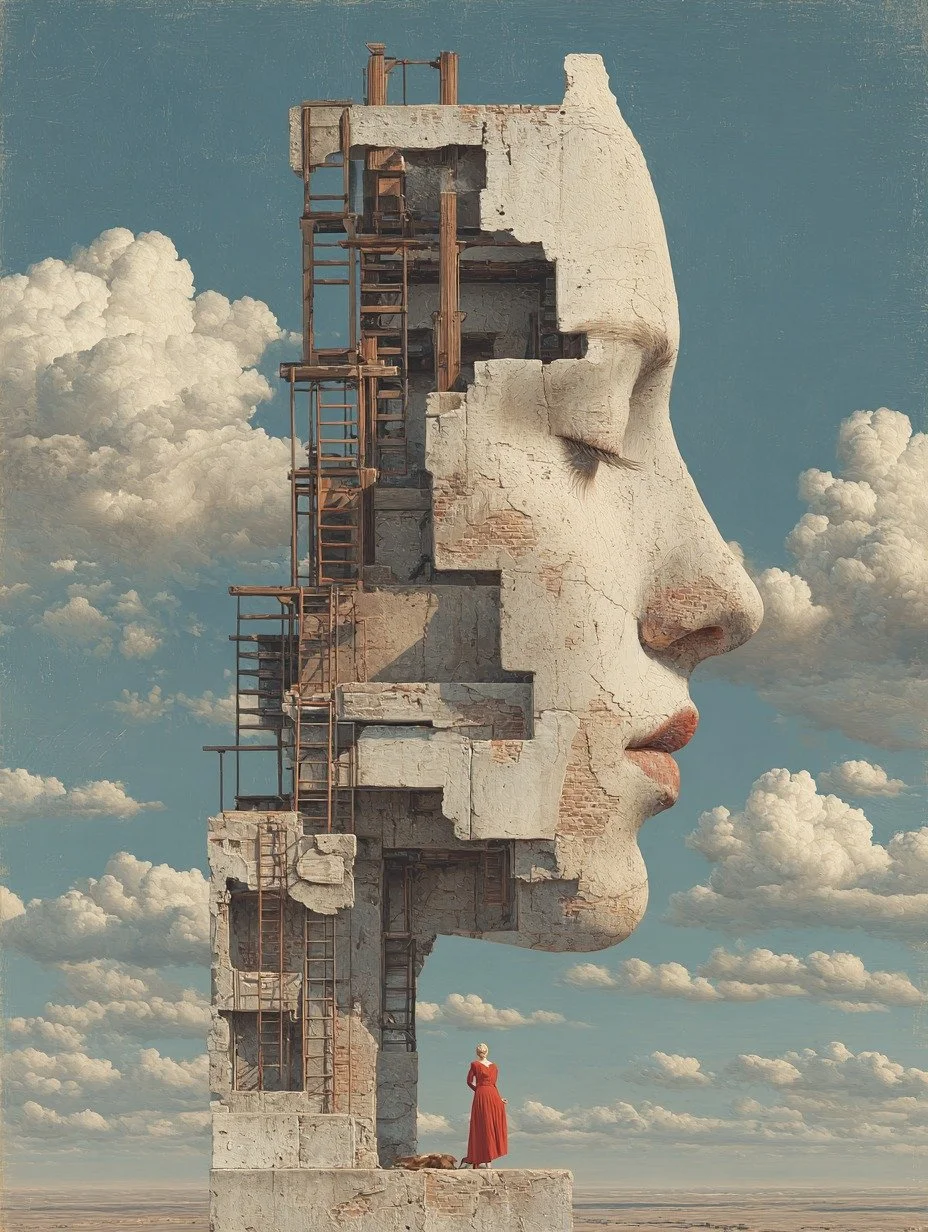
Tower image created with AI by artist Koji Sato. https://www.facebook.com/groups/plism/posts/24317700234546416/
The Shadow of Inflation and Identification
All things have a shadow side. The tower also has one. Two, actually (at least!). The first has to do with losing touch with suffering. If we climb too high in the tower without continually touching base with the lower levels and the earth, we enter the ivory tower where we can become addicted to comfort that is separate and above suffering (our own and that of others). We ideate but don’t feel; we seclude ourselves but don’t invite the difficult wonder of the unconscious; we focus only on the pleasant; we disassociate. If we stay long enough in the ivory tower, we can start to become infatuated with the grandeur of our own cognition, a grandeur that has no legs or feet extending into the soot of embodiment. And then, we start to project our own unconscious sense of inferiority by “looking down” on others, objectifying rather than relating. The ivory tower is a ultimately a neurotic condition wherein a person compulsively seeks to exclude the complexity of emotional, physical, and practical life because it will mean discomfort and disrupting “pleasantness.”
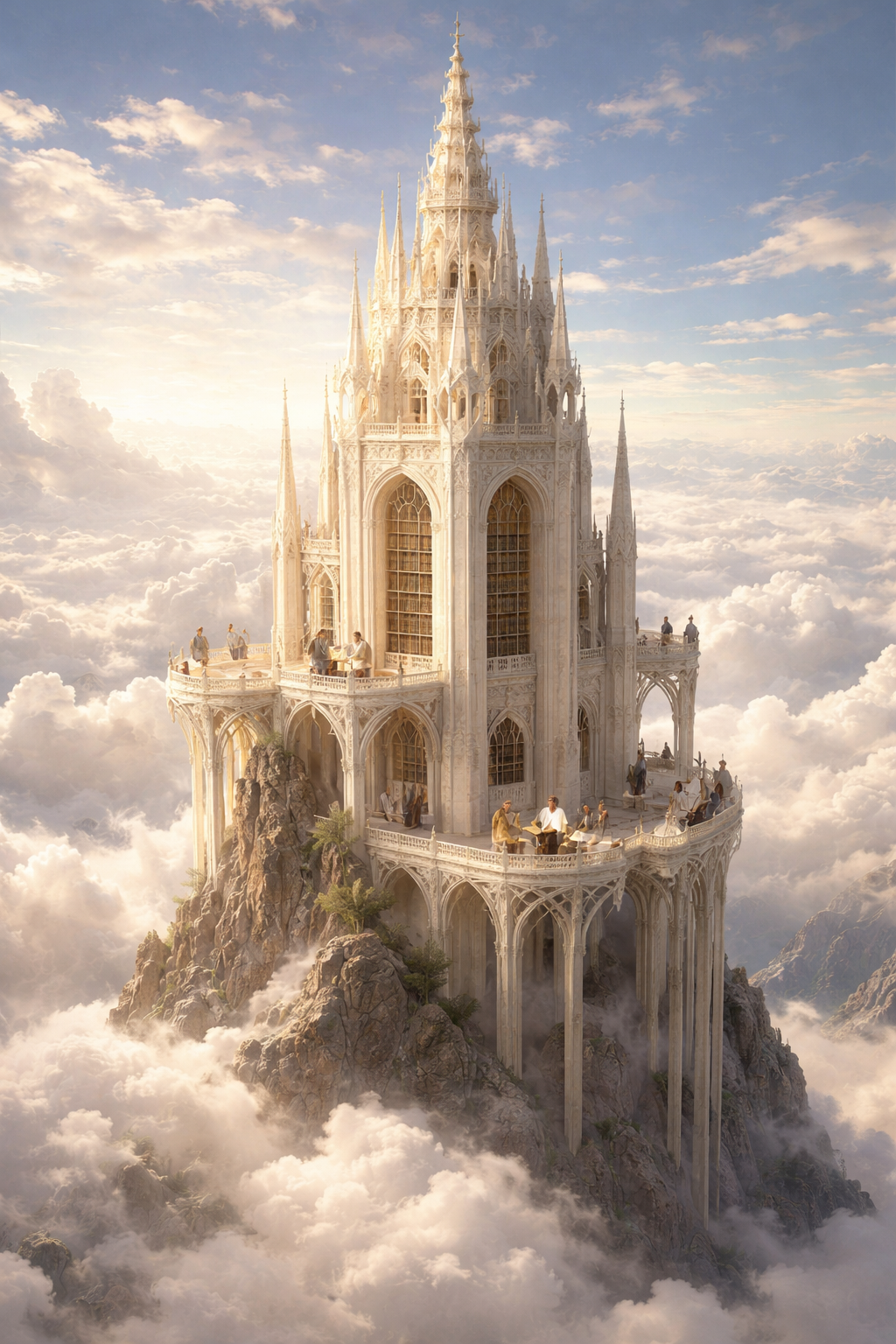
Being in the healthy tower means scaling the stairs, above and below. In the authentic, healthy tower we might dream, but then we feel the dream in our bodies; wrestle with its difficult implications; deal with the fact that ambiguity cloaks even the most resonant dream interpretations; and then, regardless, contemplate how to live out and integrate the dream’s meaning. When we really scale the above and below, the meditation retreat means seeing patterns of confusion, rather than disassociating from all that is dualistic mind. When we are genuinely in the magical tower, suffering becomes vivified right alongside any gratitude or beauty: we might relish the quiet even as we are terrified by the loneliness. Too much heaven, and it might mean you’re in the ivory tower of inflation — like Icarus, flying too close to the sun. In the healthy tower, energy circulates between stars and soil.
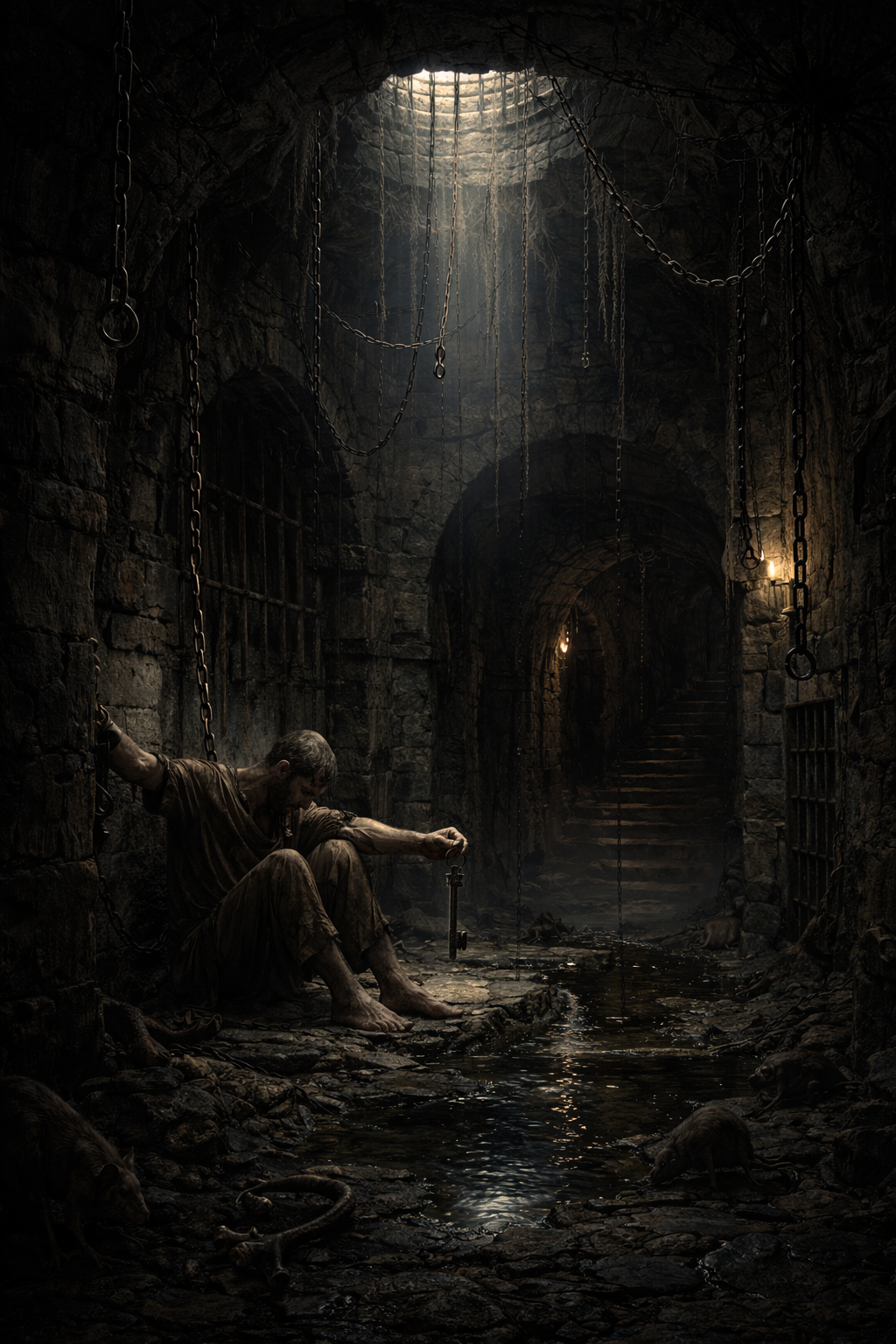
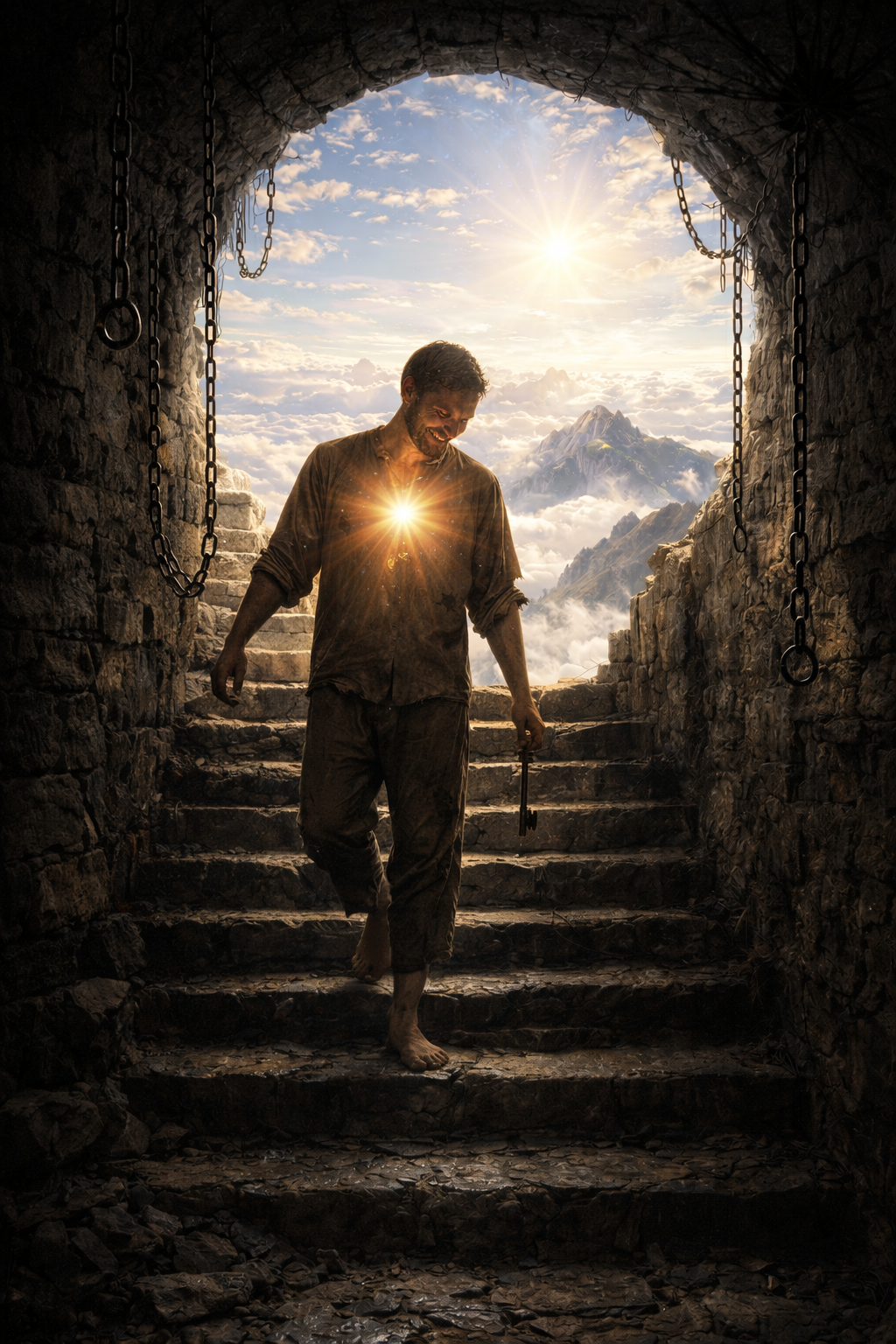
The other shadowside of the tower is the experience of the dungeon, or rather: of becoming identified with the dungeon. Being in the tower — i.e., intentionally being in a solitary mode of unblockedness — can bring up a lot. A lot, a lot, a lot. Difficult content that has been trying to come to you, to receive love and understanding, will see an opportunity and burst forth. So will inspiration and all manner of beauty, but we don’t access those states without also accepting that which might disturb. So, if you’re genuinely opening — disturbance will come. Difficult thoughts, memories, emotional pangs, and mostly: all manner of fear. Again, it’s a good sign when all these things are coming into consciousness, for it means we have truly, at some level, become unblocked. And yet, we can become frozen in the face of these disturbing experiences, fixating on them, identifying with them, and thinking they’ll be around in their current form forever. When that happens, we start getting overwhelmed, and more than that: we can start believing we’re fundamentally flawed. In short, we are incarcerated in the dungeon when we believe that the vivified, overwhelming discomfort is who we are.
None of this is to say that there’s anything wrong with spending time in the psychic catacombs. In fact, on the path of self-realization, it is quite necessary to cultivate tolerance for sitting with discomfort (with grief, fear, rage, loneliness, despair, anxiety, depression, you name it.) But, we are called to relate to discomfort with spaciousness and friendliness rather than enslaving ourselves to it. When we do the latter, we incarcerate ourselves into thinking we are nothing but our trauma and internalized conditioning. If we are in a state of intentional solitude but repeatedly believing that we are unworthy or faulty, and getting highly dis-regulated as a result, we have spent too long in the dungeon. Where as the “ivory tower” shadow experience is becoming inflated with our pleasant disassociation from earthly reality; the “dungeon” shadow experience is becoming overly identified with difficult states. Too long on the dungeon floor, and we can’t see that we are holding the key to other rooms in the tower — to other aspects of Self.
Mingyur Rinpoche once wrote, “we are not the size and shape of our worries.” We need fresh air and the view from above to see that. Part of us needs to contact our own vastness, and this is ultimately where the courage to welcome it all comes from. It’s always possible to unlock ourselves from the dungeon and scale the stairs to some perspective. Why? Because we are not just the wet, cold basement of our psychic structure. If the meditation session is getting too overwhelming, we don’t power through, but instead take a walk and get some fresh air. If we awaken from a nightmare, we don’t rush to contemplate it while our heart is pounding, but instead, go about our morning routine, stretch, and return to it when we feel some distance. We remember impermanence and look up at the sky (classic, sage advise for overwhelm that really does work). We climb the stairs to the above. Not to stay there forever. But to relate and return to the below with some insight, and, dare I say it: with some love.
The Right to a Beautiful Life
When we spend time in the tower, we find ourselves living a deep, wakeful, and meaningful, life. Finally, the soul has a chance to be encountered. Difficulty comes just as much as difficulty does, but it feeds the larger construction of life in ways that deepen and extend the journey, while also inspiring profound empathy and humility. One of the reasons economic inequity, social marginalization, oppression, and persecution are so unfathomably cruel, is that the denial of our basic state of well-being makes living into our birthright of a meaningful life that much harder. How can a person spend meaningful time in the tower when all their energy has to be spent simply guarding the basic foundation of day-to-day needs? Too often, the stones people have gathered for construction of inner work are robbed. Violence as physical deprivation is horrible. But violence could also be defined as depriving someone of the conditions to build the tower — the Temple of our lives. To live a meaningful life is our birthright, and the deprivation of that possibility is, quite simply, barbaric.
Time in the tower is sometimes labeled as self-indulgent by those who don’t spend much time inwards but who have the means to do so. Sure, as we discussed, there’s always the risk of getting stuck in the upper echelon of the ivory tower, but my experience of those who spend ample time in the inner tower in balanced ways is that their hearts break readily at violence and their compassionate activity in the world is profound. People who spend time constructing, climbing, and descending their tower are in touch with their own aggression in ways that mitigate projection of that aggression. They also are in touch with life’s vibrancy and mystery, and as a result, long for others to access their own version of meaningfulness and liberation. In short, there’s a lot of love in the hearts of those who have a robust inner center of unblockedness — and this love has teeth. My best friend, Dave, is someone who spends copious amounts of time in the tower, at least 2 hours every morning, and I’ve never met a kinder, more responsive soul. He helps an extraordinary number of beings, yours truly included. My sister, lives in artful life in Santa Fe, New Mexico, spending plenty of time in the tower of simplicity, spiritual study, and quiet painting. She cares for my father and all those around her with a love that brings tears to my eyes as I write this. Often, the poo-poo’ing of those who make space for quiet comes from a place of insecurity; the critic isn’t sure that their own psychic legs are strong enough to scale the stairs of the above-and-below. (They are! You can do it!) In reality, entering the tower from time to time is a tremendous act love for self and others, because we tap into a place beyond the duality of self and other.
What of the Outer Tower?
It’s true: Von Franz and Jung both literally built physical towers. But they did so as a refuge and place to access and extend the inner Tower-Temple of the (capital “S”) Self. There’s something of wink and chuckle in that fact. We often live out in the outer world what we actually need in the inner realm, and Von Franz and Jung did so decidedly and consciously in this case. But I do think there’s a lesson there too, because sometimes its helpful to adjust the outer conditions, even if just a little bit, so as to go deeper into the inner dimensions. I’ve done at-home, solitary meditation retreats — and they are lovely. But there is something about going to wooded land, surrounded by mountains, where there is nothing for miles except the blessings of teachers who, long ago, practiced in the same place. There is something about the outer wilderness that really signals to the inner wilderness of the unconscious that we’re listening. We’re ready to dance. We’re ready to ascend and descend. We’re ready build new additions. We’re ready to construct the Temple of our lives with meaningfulness. With soul.