Ode to the Anxious
If you have anxiety, I want to start out by bowing to you. Especially during these times, when the world seems to be extra abuzz with energy. In the words of the great poet, Andrea Gibson: “…your heart could lift a city from how long you’ve spent holding what’s been nearly impossible to hold.” I’m not trying to be dramatic or hyperbolic when I say: you deserve a freakin’ medal. Hell, we deserve a medal. As someone who has held anxiety episodically all my life, knowing her great power, her physicality, her speed, and her ability to dominate all other experience in a moment, I’m writing this in kinship with you who might also be doing the work of feeling and relating to her. So, I intuit, yes, our hearts could lift a city from how long we’ve spent holding the impossible. And, as Gibson expresses so beautifully: “This world needs those who know how to do that.”
I realize there can be great skillfulness in viewing anxiety as a problem to be solved. I’m certainly not against people adopting this attitude and finding relief through medications or other safe, remedial measures. Why not? That being said, I also think there is another side to the anxiety story that is sometimes missing from pathologizing approaches. In the untold story, people who experience anxiety are doing something right and also have special gifts. So, in addition to a western medical lens and a purely psychological-behavioral lens, I think it behooves us to consider a more spiritual-existential lens when it comes to one of the increasingly prevalent energetic constellations of our day. Failing to do so might mean we miss out on an important perspective, one where anxiety is a gate to wisdom and even a sign of tremendous spiritual power. So let’s suspend the narrative of anxiety as inimical for just a moment and consider — what stories haven’t we heard about her?
The Unavoidable Adventure: Existential Anxiety
Remember the Existentialists? They were those 19th and 20th century western philosophers that explored the connection between unavoidable human struggle and life’s meaning. For them, a conscious, intentional relationship with life’s inevitable suffering is actually the key to an authentic and meaningful life. And so, the existentialist position on anxiety is two fold. First, anxiety is understood to be an existential reality, that is — something natural that comes with the basic fact of being alive, something unavoidable. And second, those who are aware of their anxiety are having an authentic relationship with the nature of reality, that is, they have understood something true about the way things are. What has been understood? That all is open, free, and uncertain. That anything can happen. In other words, the anxious are those who are rightly intuiting the tremendous power of life’s vast potentiality. After all, life is inherently uncertain. To know this deeply is to have anxiety bubble up from its latent, unconscious forms to the realm of lived experience. Translation: you who are anxious, you are right. You are right about how wide open and therefore potentially frightening it all is. Total freedom is alarming to the human nervous system. As Soren Kierkegaard famously said, “Anxiety is the dizziness of freedom.” Jean Paul Satre, another existentialist, said that anxiety (“anguish”) is the understanding that one is “condemned to be free.”
In more colloquial language, Vajrayana Buddhist, therapist, and author, Bruce Tift says this about anxiety:
“For most of us, anxiety is an incredibly difficult experience to work with. It seems we have a collective societal fantasy that we’re not supposed to feel anxious… Anxiety feels like a problem that needs to be fixed. But in my experience, anxiety is a completely legitimate and valid, if not pleasant, aspect of being human… it is part of our everyday experience. I know that I feel anxious every day. I might be anxious about some conflict with my wife or nervous about paying a bill. I may feel anxious with no obvious explanation. I don’t think I’ve ever met anybody who doesn’t experience anxiety as an ongoing part of life. So anxiety is not a choice; the choice is how we relate to it.” (Already Free, pg 133).
Many existentialists considered the overtly anxious the most courageous among us because they, at least, were relating to anxiety consciously (with awareness). Indeed, it takes courage to step out of denial about our fundamental existential fragility. This means that the anxious are the truth bearers in our society; those who are facing the wide-open existential reality and who manage to live in spite of the unavoidable vulnerability of our human condition. This is no easy task. Kierkegaard explains that “… no Grand Inquisitor has such frightful torments in readiness as has anxiety…which never lets him go, not in diversion, not in noise, not at work, not by day, not by night." There is great heart in opening oneself to it, in consciously beholding the intensity. In fact, to behold and face life’s inevitable existential anxiety is the path to wisdom. Kierkegaard explains, “I will say that this is an adventure that every human being must go through – to learn to be anxious… Whoever has learned to be anxious has learned the ultimate.” (The Concept of Anxiety, 1844).
Whoah. If it’s true that those who have learned to be anxious are those who have learned the ultimate, then those who have found a way to live with anxiety are likely highly spiritually mature. They are and should be our teachers, our healers, and our guides. I have many therapist friends and many of them have periods of dark moods and acute anxiety. When these storm clouds stir especially vividly, I’ve witnessed an episodic imposter syndrome develop in them (and myself!) — doubting the appropriateness of guiding clients on account of felt anxiety. But if its true that anxiety is unavoidable, and it’s also true that we are living alongside it, I would argue that those who grapple with the “adventure” of “learning to be anxious” — those who, on account of their anxiety have “learned the ultimate” — are EXACTLY the people who should be guiding others. I don’t want a counselor or therapist or guru who has had an easy life and is unconscious about their existential anxiety. I want a guide who has been to hell and back in working with it, who has deep empathy for its humbling power; and who has found the courage to live with it.
So you who doubt your wisdom on account of the inevitable intensity of being human, riddle me this: isn’t the dirt under our fingernails also earth? Is wholeness — that is, a truly composite, dynamic, diverse, and complete Self — even possible without this intensity you feel? And isn’t it precisely this intensity that makes you know courage, yours and that of those you love? That of those you counsel?
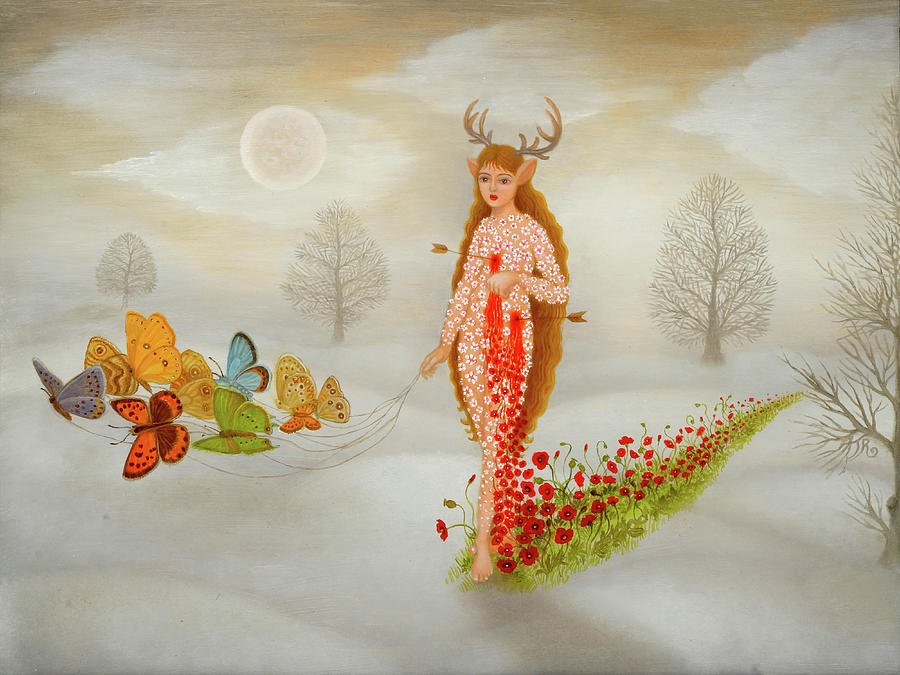
The Wounded Healer by Tino Rodriguez.
The Shamanish Porousness
Anthropologist Mircea Eliade, whose publications on shamanism are often considered foundational to those interested in the subject, noted that, among the Siberian and Central Asian cultures he studied, shamans are identified by what he called their “shamanic illness” or “sickness initiation.” Rather than someone who appears emotionally regulated and physically in control, a person with shamanic tendencies was often spotted because of their waves of hysteria, nervousness, or dread; their need for periods of withdrawal or disassociation; their physical symptoms with no clear cause; and on account of having dreams or visions that were disruptive to their ordinary reality. Among the Evenki and Yakut peoples of Siberia for example, Eliade explains that early shamans were quite emotionally volatile, excitable, and typically overwhelmed by sensory or spiritual impressions. What is especially interesting is that — rather than being treated as pathology — these experiences were often identified as a calling or a special gift. The disregulated person was seen as someone with a psyche open enough to hold more than ordinary consciousness; as someone who could possibly survive the terror of initiation (which typically included a fearful period of chaotic engagement with spirits); and as someone who could somehow emerge with wisdom and a profound capacity to help others.
I’m not trying to say that those identified as shamans in the various cultures where that title existed experienced “anxiety” in the sense we use that word today. To impute all that’s implied by the word “anxiety” in its modern usage onto the experience of those who were identified for shamanic initiation feels off, because the “shamanic sickness” Eliade describes was likely not understood in exactly those terms. Nor am I trying to say that those of us who feel anxiety today are all “shamans” — that title is extremely culturally nuanced and must be bestowed within the cultural context in which the role arose. HOWEVER, I am saying this: I think those who are highly anxious are also typically highly sensitive, porous to larger realities, and susceptible to energy and stimuli that are both seen and unseen. I’m also wondering how acute sensitivity and porousness, so common in today’s anxious folks, would have been interpreted in cultures that were less pejorative towards these experiences. Have we made the mystic a madman by virtue of the smallness of our modern lens?
I don’t know much, but I know this: I often experience, hold, and then have to let go of energy in my body that’s “not mine.” And the ability to receive it in the first place feels directly related to precisely the kind of porousness and sensitivity that also lends itself to anxiety. As a Hospice Chaplain, I’m around illness, grief, and death a lot. Like — a lot. Sometimes its quiet, slow, and sweet; and sometimes I’m around the wails and fits of grievers for hours. Either way, I’m aware that when I come home, there is a certain energetic residue of our shared time together that is with me. I do things to work with that. I meditate and “watch” this energy off-gas. This practice is not visual — it’s felt. After work, I typically like to put my body under water — a shower, a bath, a dunk in a river, to experience a greater flow of receptivity that helps me with release. I cry sometimes. I burn incense or candles. I massage my body while saying mantras. Often, I dream something that converts the energy. Sometimes I get really sick with an unusual cold that lasts weeks, with a fever that comes and goes and comes back again, and I’m fairly certain it’s not entirely “mine.” But eventually the energy passes, and I return to the field of service. Sensitive and then okay. Anxious and then okay. Burdened and then okay. Suffering and then okay. Like breathing in and breathing out, its all strangely beautiful and alive, even though its damn awful, uncomfortable, and intense sometimes.
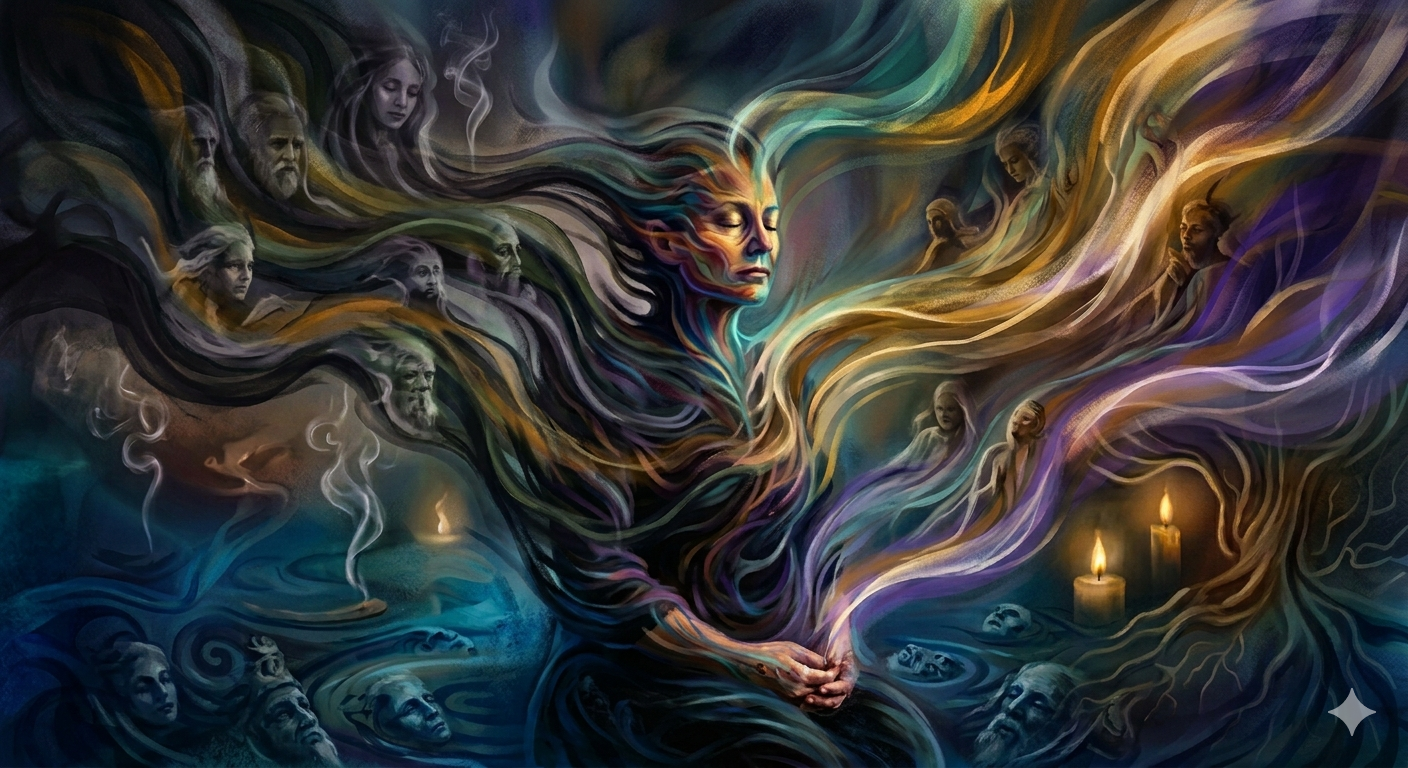
I have a background knowing that the root of my anxiety is a high sensitivity and openness that, despite sometimes leading to overwhelm also fosters great service and love in difficult contexts. So, when I see people who are highly anxious, I often wonder: are we missing the signs? Are we missing the signs of someone who is a seer? Of someone who has the potential to take on and transmute a lot? Are we overlooking the future sage? The poet? The priest? The doctor? The prophet? Is this person, who is always getting colds or aches, “sickly;” or are they sensitive to something collective, some greater imbalance? They say we are living in the Age of Anxiety. What if there are those who can experience more than their share, but who lack the cultural context and teachers to integrate their challenges as gifts? Are we outcasting the very (anxious) ones who would have the power to guide us through these Anxious Times? And if so… isn’t that tragic?
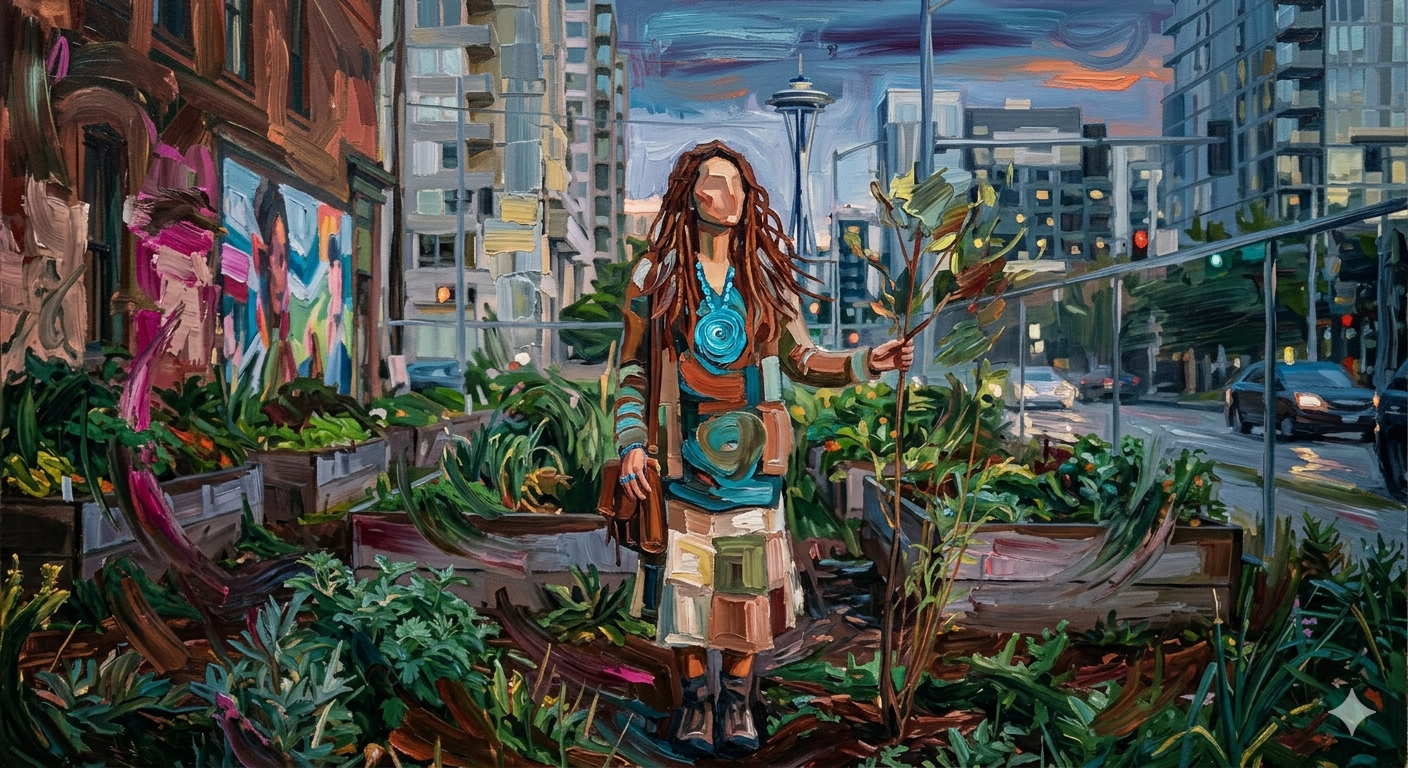
I find it very hard to believe that, even though, for thousands of years, some proportion of people, across various indigenous cultures, were born with the qualities of a shaman, that somehow the shamanic potential would have “dried up” simply because a place is surrounded by skyscrapers or suburbs. I’m sure the shamanish are among us. I’m sure many of them are likely highly anxious, because why wouldn’tyou be overwhelmed from seeing, experiencing, and sensing more than the average person?
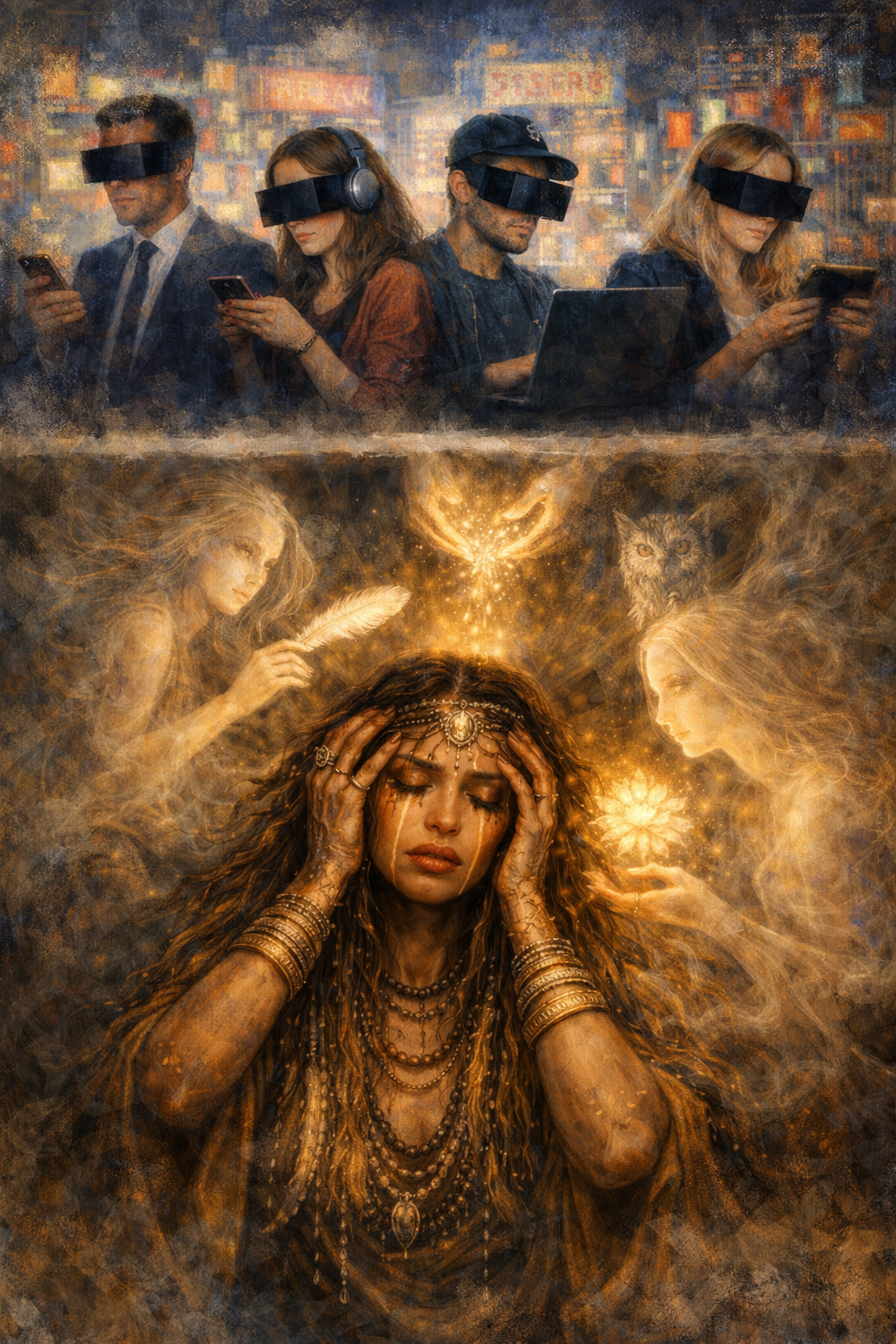
It’s not that there are no longer those with shamanic potential. What has changed is that modernity has few cultural containers with the history and sacred outlook to unlock the fullness of that potential. Actually, it’s even worse than that. In the United States, we live with the colonial legacy of committing continental genocide against indigenous peoples who do have awakened spiritual outlooks. We didn’t just ignore, we attacked those sacred containers capable of discovering, holding, and honoring healers, medicine peoples, and spiritual intermediaries. So, it’s not only that U.S. culture, by and large, ignores the gifts of the shamanish; it’s also that it suffers the fate of having extra blinders on having never fully reconciled with the truth of its violence against indigenous communities and their way of life. But to you who might hold this potential, I say this: as much as you can, don’t believe the conditioned rejection of your potential gifts. The culture won’t be able to see you, and won’t be able to honor your sensitivity as a power. My prayer for you is that you lean into that noble loneliness and foster a healthy doubt that the world around you knows the full story.
Anxiety as Archetype and the Art of Approach
The word “panic” comes from the Greek god Pan, who was essentially the god of the wild, having taken up residence in Arcadia, a place known for it’s unspoiled wilderness. Pan is depicted with the legs, hindquarters, and horns of a goat, and is associated with eros, sex, and instinctual forces. Enraged by clumsy intrusion, especially when it disrupted his naps, Pan would famously startle travelers who mindlessly wandered through the wilderness, terrifying them with screams and sudden noises. Apparently his wild appearance and cacophony was highly effective: electrified with fear, people would flee in a frenzy. Even his mother found him too unbearable to behold, and so abandoned him soon after he was born. And yet Pan was also known for stewarding the transition from Winter to Spring; for serving as protector of wild creatures and domestic flocks; for guaranteeing the fertility of pastures; and for composing the most beautiful music. In spite of his mother’s disgust and abandonment, he was warmly received by Zeus and the Gods of Mount Olympus, and was particularly loved by his father, Hermes. Historically, Pan had a loyal following. He was mostly worshipped in natural settings, like caves and grottoes, particularly by the mountain people of Arcadia who knew the full spectrum of his powers. Later, Pan was even seen as a version of Zeus by some, and archeologists have found statues, altars, and even temples erected to honor him.
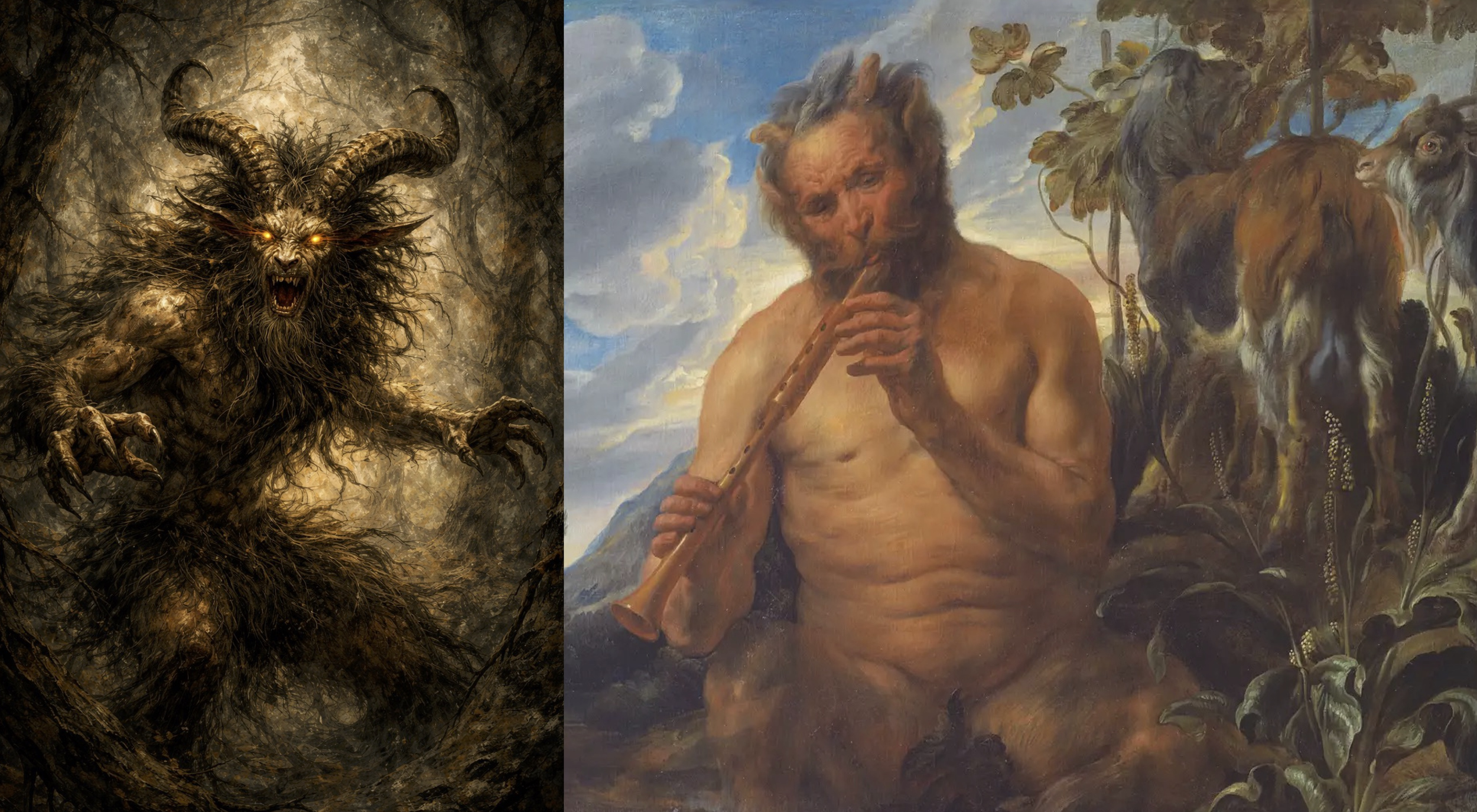
Archetypes and the mythopoetic stories about them can teach us about the multi-valent qualities of powerful forces. And so, when we think of anxiety as an archetype, we can look to archetypal images and myths to discover a fuller story of what anxiety is (beyond the modern, overly-simplistic notion that it’s just “a problem.”) We can also look to these images and myths to discover coded lessons on how to approach the archetype (in this case, anxiety).
We can think of archetypes as patterns of perception that are deeply imprinted on the collective unconscious, and that “pull” on us and affect our lives. They can even possess us if we’re not careful. Each archetype refracts itself into countless stories and images across cultures, revealing the fact that archetypes are, by nature, multi-faceted and complex. They can never be summed up by a single image or story, even though they give birth to many. When we understand anxiety as an archetype then, we can expect to encounter various images and tales, each of which has rich symbolism that can help us understand what anxiety is and how to work with her from various points of view. In this way, an archetypal lens invites a more nuanced way of looking at anxiety, one that celebrates her many potentialities and helps us navigate her awesome, energetic power.
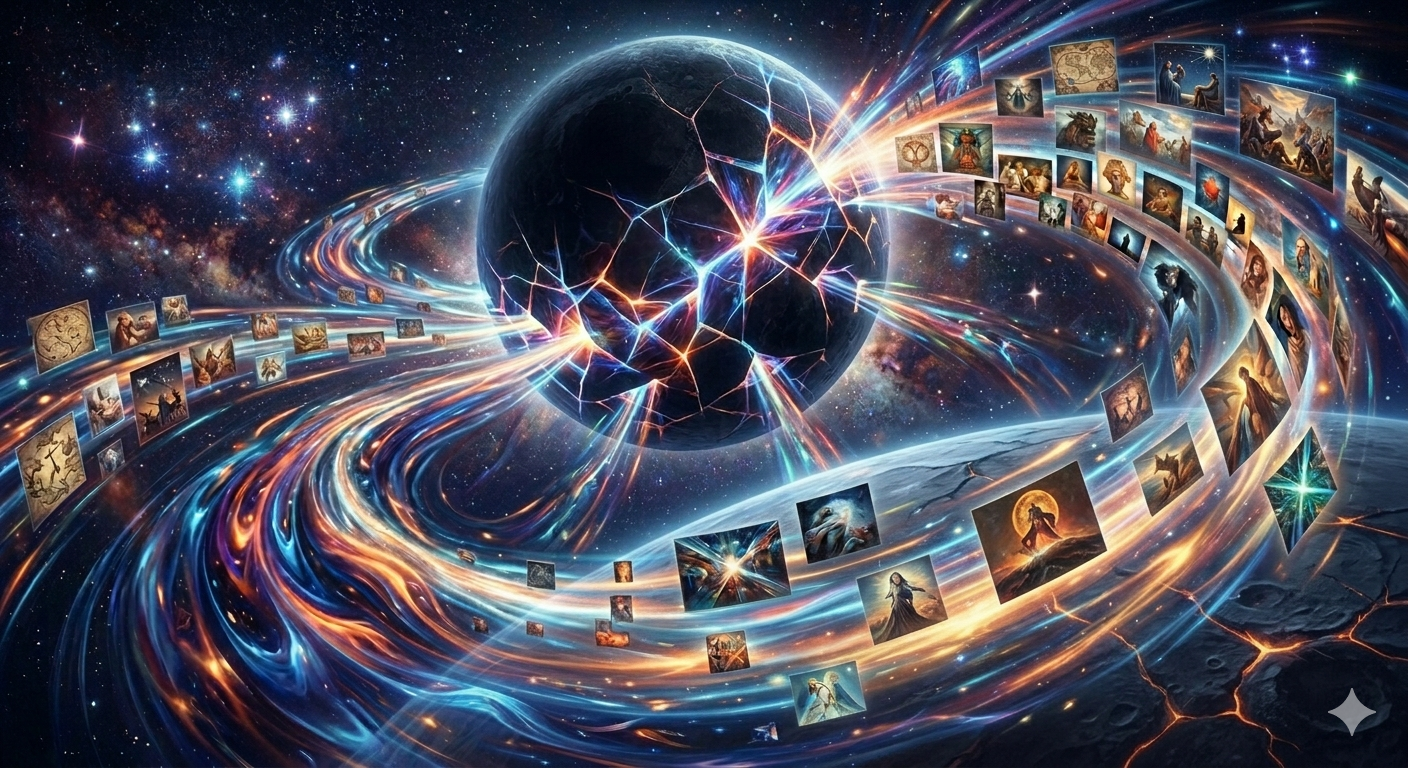
In my view, the mythos surrounding Pan stands for the message that, when it comes to anxiety: relating to our bodies, our need for rest, and our natural instincts wisely transmutes an otherwise frightening energy into a helpful force, one strong enough to bring about new beginnings. Pan clearly has a binary existence. The mythology reveals that he can be panic-inducing OR he can foster fertile ground; he can cause us to flee OR he can loyally protect our animal-side (our instincts and natural rhythms). Pan can be a cause for terror OR eros (a passionate life); he can be unpredictable OR a reliable steward of Spring (a new life). Through Pan, it’s suggested that cacophony could just as easily be music. But what makes for the difference between his two modes?
The chance to harness Pan’s strong energy in helpful ways seems to depend on our reverence and respect for the wild: for the animal within us, for our instinctual needs, and for our various seasons and cycles. Stumble through the dark wood with irreverent disregard for what needs rest, and you risk getting possessed by Pan(ic). He needs his naps, after all. But, worship at the altar of Pan in the grottos and caves of the earth (i.e., tending to your physical body), and he will reward your instinctual allegiance by imparting a strong, passionate energy that can navigate you to greener pastures — to a budding, new life.
Anxiety often arises when we go past the body’s speed limit. We have all had those moments mid-week where we start to ignore our exhaustion. We need to send “just a few more” emails; or finish “just a few more” things, but somehow, the list keeps getting longer. We stumble through the forest, disrupting what’s calling in us for rest and renewal. Our energy gets sucked into urgency and fear, when it might have preferred to express itself as exercise or relaxation. But, just as the ancient Greeks found ways to worship Pan, so too can we moderns. We worship Pan when we are aware of our bodies, when we honor their natural limits, when we integrate our drives and needs. We worship Pan when we see anxiety as instinct, as a message from our animal, bodily intelligence, that it too has something to say about our choices. We worship Pan when we make an offering — a sacrifice of certainty — so as to be open to change and see what wants to bloom. We could say that we tempt Pan’s wrath when we’re too fast; when we’re disrespectful of physical needs; or when our mind becomes overly ambitious and pushes us into activities that go against our deepest instincts. The good news is that it’s never too late to start honoring Pan. Why? Because the energy of anxiety is just that — energy. When we move too fast, it can sometimes feel like this energy is electrocuting us. Yet move at your own animal rhythm, and the energy can be the wind at your back, ushering you into a new season.
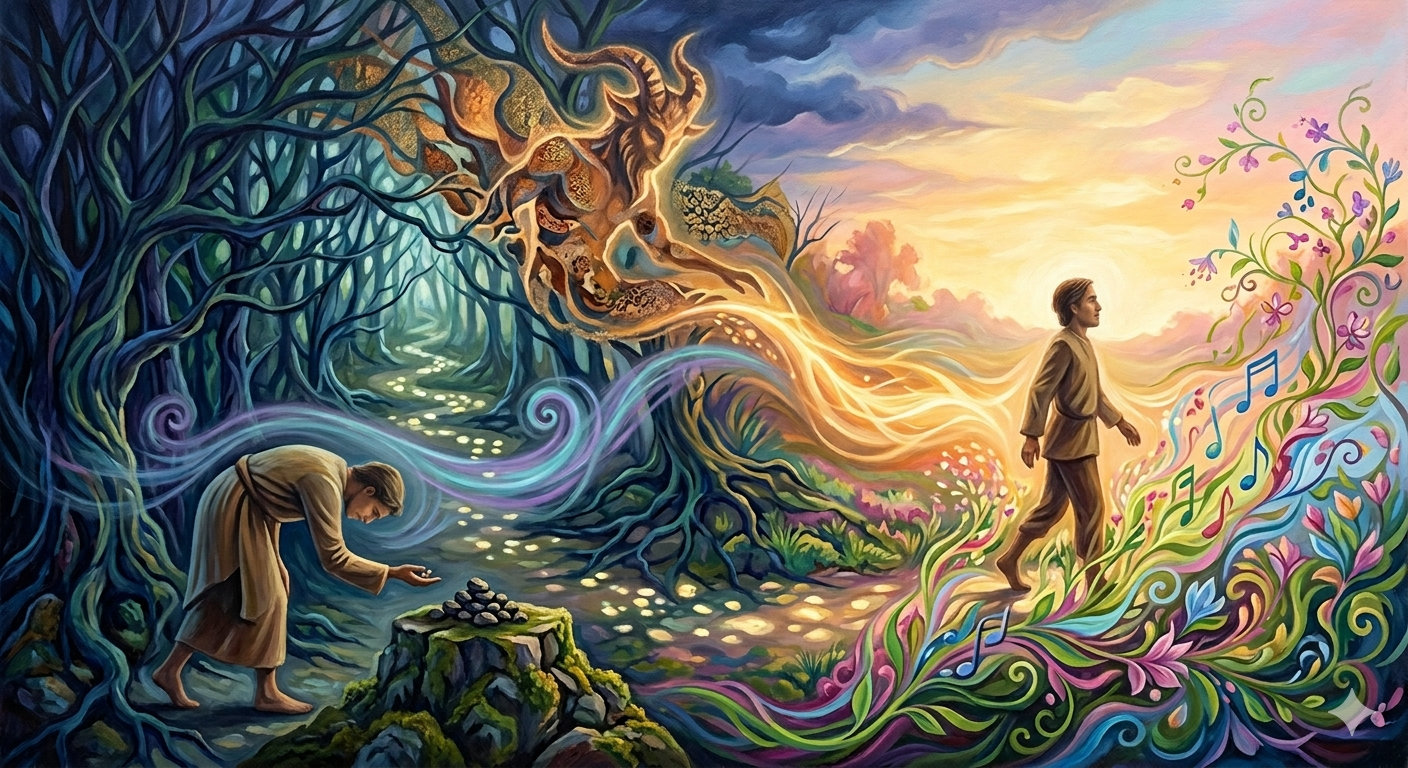
Starting in 2012 after my mother died, and for at least a couple years after, I had Pan(ic) attacks. My grief felt uncontrollable (of course!) and so, unconsciously, I compensated by controlling everything else: bringing in the last semester of law school with an A+ stellar performance; studying nonstop and passing the bar exam (in two different states); killing-it as a newbie litigator for legal aid. But I eventually realized that the ego is never as strong as an archetype. After getting possessed with fear (by Pan) too many times, I finally surrendered that we needed to start developing a new relationship. It took a lot of time in meditation and a ton of kind, gentle self-talk, but gradually, I learned to listen to the body, get good rest, and eat nourishing food. I learned to see strong energy movements as radiant and vivid rather than inimical; and started to sacrifice the “known” to see where the “unknown” wanted to flow. I would have never guessed the bucolic beauty of what unfolded next in my life, which came in the form of a renewed spiritual deep dive and a vocational switch to chaplaincy (into pastoral-wink-care). This wasn’t a gentle transition. It came with the force and speed of the energy that undergirds anxiety — but it was joyful. It’s not that Pan doesn’t growl at me from time to time as if he is about to scream, but when he does I remember to get to the grotto-temple, start feeling the body, and follow my instincts.
Seeing anxiety as an archetype can help us anxious-types realize that, far from having something wrong with us, we may just be rightly sensing a surge of instinct wanting to move us (or the collective) into a new season of life. Consider that maybe you aren’t flawed or unable to handle something: what if you are just experiencing the same wild power that transports nature out of Winter and into Spring? It takes a lot of energy to facilitate transitions, just like it takes a lot of energy to birth a new life. The surge of energy you feel might just be an ally, depending on how you receive it.

Consider also a different archetypal image: that of the Magician in Tarot. There are countless meanings associated with this card, but one of the prevailing interpretations is that the Magician represents the ability to convert numinous inspiration into something real and tangible. The Magician is the shaman that can render “what could be” into “what is.” He gives spirit some flesh. As Rachel Pollack explains in her best selling book Seventy-Eight Degrees of Wisdom:
“The Magician represents consciousness, action, and creation. He symbolizes the idea of manifestation, that is, making something real out of the possibilities of life… He is a lightening rod. By opening himself up to the spirit he draws it down into himself, and then that downward hand, like a lightening rod buried in the ground, runs energy into the earth. Into reality.”
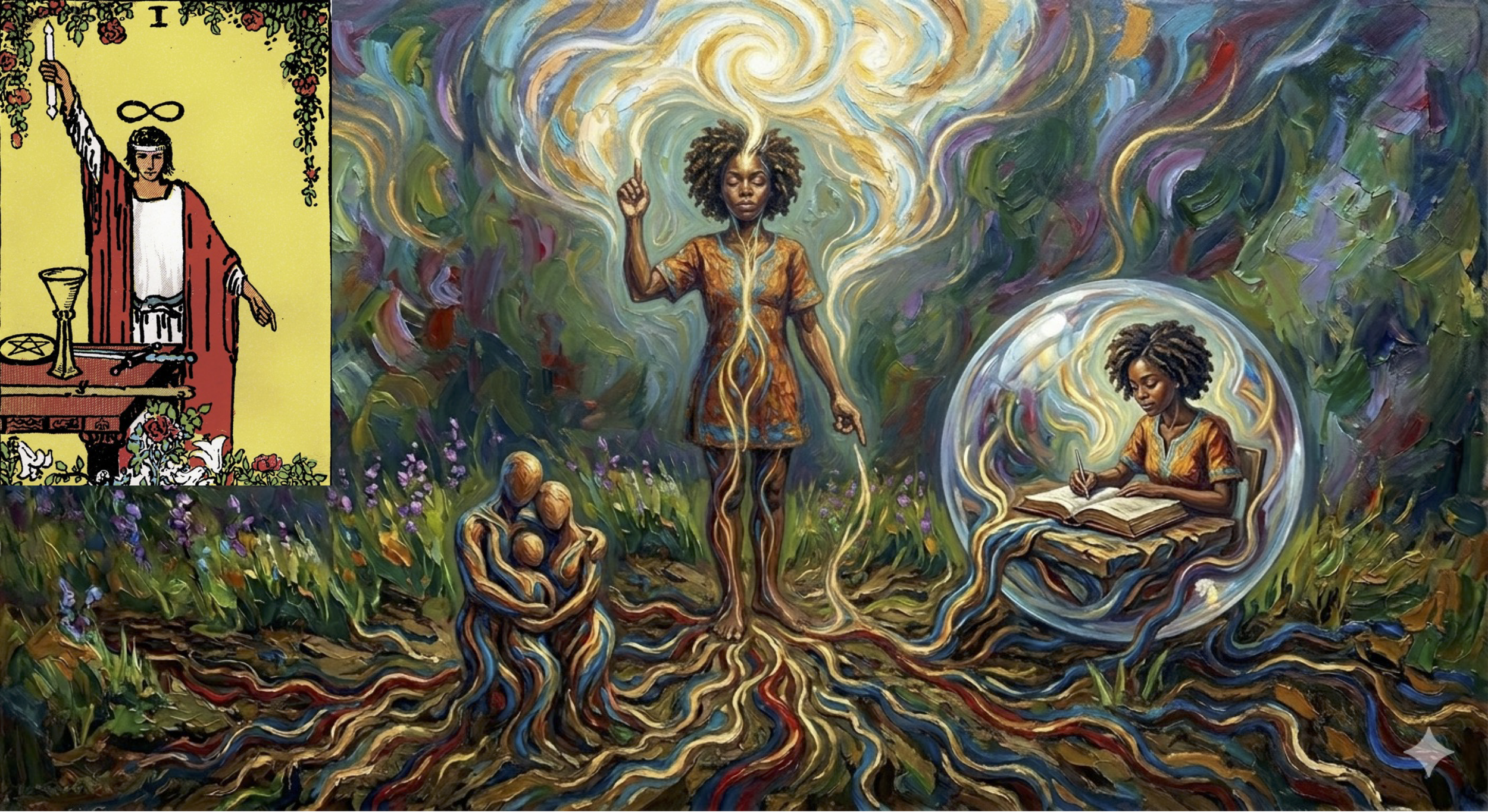
Seen in the light of the Magician’s task, the energy undergirding anxiety becomes a natural part of living a creative life. We receive inspiration as if by magic, and it would seem this inspiration wants to be “grounded,” that is — wants to be made manifest in reality. So, maybe the energy gets channeled into writing a book or painting a portrait, but just as easily it might get channeled into starting a family or rendering the backyard into a garden. Anyone who has ever had a great idea or has been struck with artistic fervor will know that inspiration can be downright uncomfortable until it is fully channeled into a creative outlet. We itch with a desire to make our imagination a reality, to make our deepest longings so. As Pollack says, “far from being gentle, this surge of energy can be almost painful.”
What happens if the creative energy is received but isn’t funneled into an act of creation? Well, Pollack says:
“If we do not ground the lightening, it can become trapped in the body and will force itself on awareness as anxiety. Anyone who has ever gone through a moment of total panic will know that acute mental anxiety is a very physical experience, a feeling of the body running wild, like a fire out of control.”
But it’s worth keeping in mind that the person experiencing this kind of acute anxiety is actually already well on their way to fulfilling the Magician’s quest: they have been able to receive the transmission “from above”; they are halfway there. Therefore, seen through the lens of the Tarot Magician, anxiety is a sign that clarity, inspiration, or the urge to create or make a big change — has landed, even if it’s not totally conscious yet. In fact, we could consider anxiety an intelligent adaptation when we are overwhelmed with possibilities of what could be, when inspiration that has not yet found it’s way to our conscious minds or into the world of form. It’s as if the energy insists on bubbling up to the point we can notice it, so that, ultimately, we can do something with it.
There are an unfathomable number of other archetypal symbols and stories that could help us unpack anxiety in a nonpathologizing way. The Greek god, Hermes, associated with the element of air, is also an image of anxiety’s potential — revealing that this speedy energy has the power to render us into psychopomps and shapeshifters, capable of descending into the underworld and returning to communicate about it with artistic rhetoric and piercing insight. Amoghasiddhi, the Buddha of successful, skillful action, stands erect with the mudra of fearlessness within the midnight sky. He has a retinue of half-eagle-half-man creatures, who clang cosmic cymbals, echoing endless vibrations. When the energy is unblocked and free — it reverberates as compassionate action in the world. We could go on, and on, and on. And, I imagine, after a while, I wouldn’t even have to analyze these archetypal examples for us to get some intuitive “hits'“ about anxiety’s nature.
Taking an archetypal view when we are overwhelmed with anxiety means understanding that energy is not malevolent, and has arrived for a good reason. Perhaps it’s our instincts and physical needs rebalancing a disembodied orientation; or perhaps, quite unknown to us, it has been too long since we last engaged in an act of creation, and we need to give the spirit a body. When we feel overwhelmed with anxiety, therefore, we can consider that the system is reacting rightly. Life does have a certain electricity to it. When that electricity shows up, it’s not a character flaw. It could just be the surge of energy we need for where we need to go next.

The Ultimate Promise: Anxiety as Bliss
During a period of relatively strong anxiety about 12 years ago, I remember meeting with one of my meditation instructors for a cup of tea. I told him about a recent practice session I had while I was anxious, and how I felt and intuited that anxiety is ultimately nothing but pure bliss. My meditation instructor simply sipped his tea and matter-of-factly said, “of course it is.”
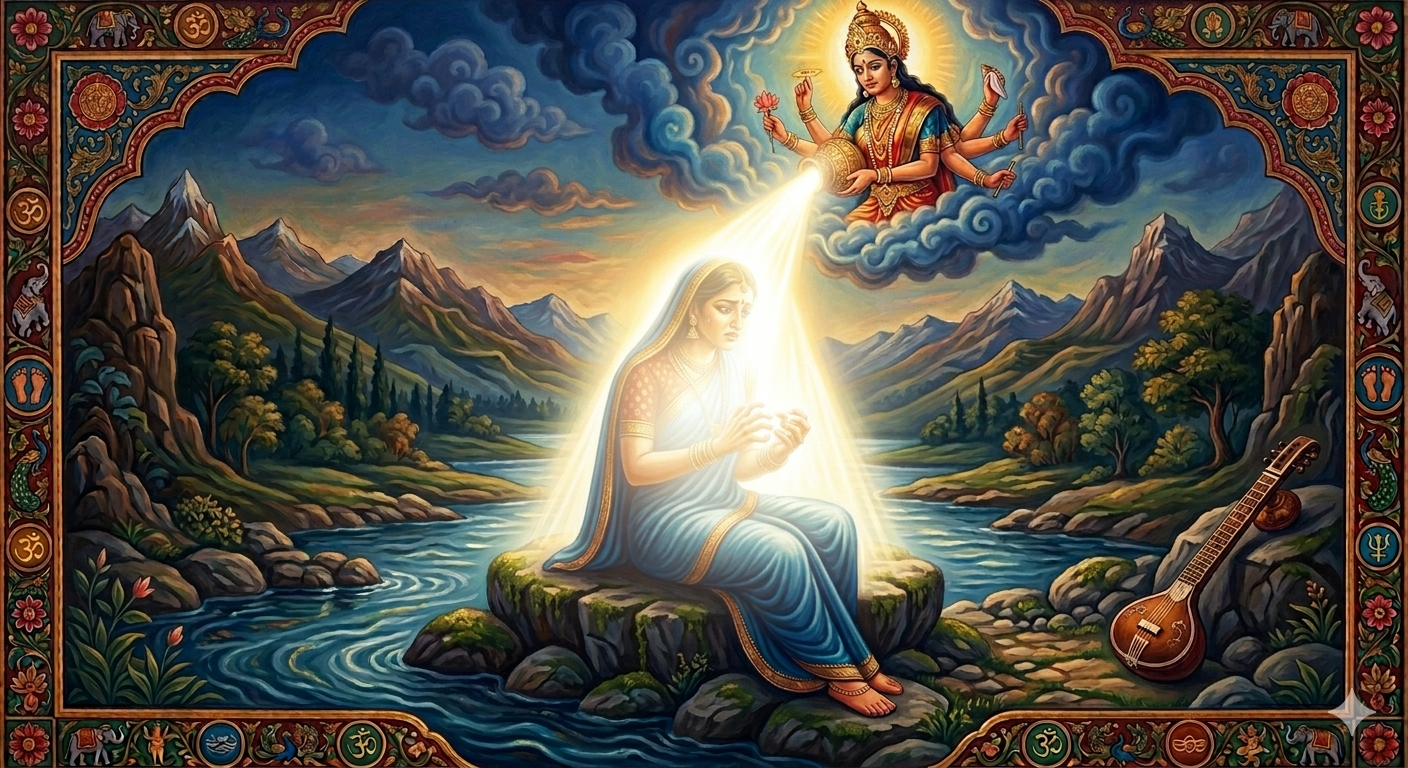
Not too long later, I formally took refuge vows (on the Buddhist Vajrayana path) with Mingyur Rinpoche and happened to be given the name Karma Dechen Wangmo, or: Holder of Great Bliss. Then, soon after that, I discovered an image of Sukhasiddhi, the deity often referred to as the Queen of Great of Bliss, and the painting immediately had me in tears. I felt I had discovered a self portrait, one that depicted a freedom I intuited was already there, but had not yet realized.
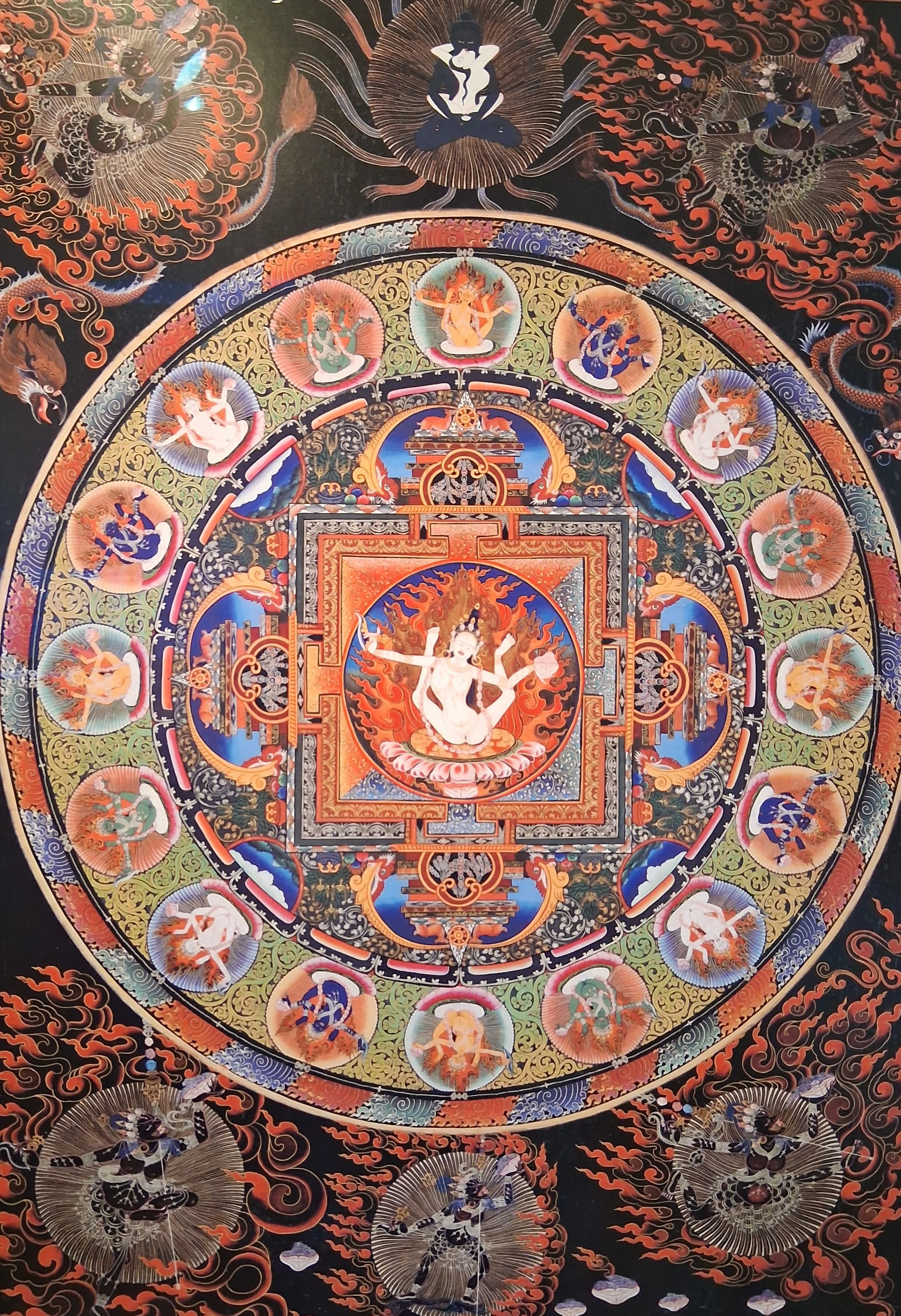
From the book, Celestial Gallery by Romio Shrestha.
All I can say is this: when anxiety is given enough love, reverence, and space — it reveals itself as Sukkhasiddhi — as the bliss of nondual knowing. We often think of bliss as ecstasy or pleasurable physical sensations, and on the coarsest level, sure, that can sometimes be so. But on the deepest level, bliss is the simplicity of pure being, which is flooded with the luminous knowing that we are both the source of manifesting reality and the reality that apparently manifests. Sukkhasiddhi is the profound bliss of clarity, knowing that all is ultimately you and therefore could never harm you. She is the energetic space in which the seeming-opposites arise and collapse.
I know. When anxiety comes, it can feel like the antithesis of bliss. Every fiber in our being just wants it to be over, and wants it to go away. I get it. In my shaky bones, I get it. Tomorrow, today, or maybe in an hour — I’ll feel anxiety. But discomfort isn’t always a great predictor of whether or not something is ultimately wonderful. Some of the best things in life are often cloaked, at least initially, in discomfort. So many of us have judged the Anxiety Book by its cover. And usually that cover has an illustration of an enemy, one that our collective conditioning placed there. Lately though, I’ve been wanting to read the full story. So I thought I better start writing it.
“All depends on how you look at it.”
Sri Nisargadatta Maharaj